
Starting Fresh, Not Starting Over: Arcamed’s Seamless Design Transfer Process
When does familiarity stop serving your business and start holding you back?
For Original Equipment Manufacturers (OEMs), that can be a hard question to answer. A long-standing supplier relationship may feel stable, even when warning signs emerge – rising costs, late deliveries, lacking quality, or poor communication. The perceived pain of changing suppliers shouldn’t keep you from finding a better partner. Trustworthy partners consistently maintain industry-leading delivery metrics for quality products that OEMs can trust. Shifting suppliers post-launch can be high-risk and high cost, but with the right partner, project momentum doesn’t need to stop.
One of the greatest challenges in supplier transition is the significant burden placed on them to validate product equivalency. This involves risk associated with interpreting legacy prints, ensuring feature alignment, and confirming that critical characteristics are not lost in translation during supplier changeover. Arcamed has invested in a streamlined, low-risk transfer process built around a core principle: shift the validation burden from the customer to our internal process while minimizing risk to zero.
Design Transfer Pathways
Arcamed utilizes three primary design transfer pathways depending on the level of data provided upon transition. Each pathway is designed to meet the project where it stands in the manufacturing cycle and move it forward efficiently.
- Full Data Package (CAD + Complete Prints): Direct import of CAD into manufacturing systems with use of customer prints for production and inspection
- Assembly-Level Data (Assembly CAD + Assembly Prints Only): Direct import of CAD into manufacturing systems, use of customer assembly prints for production and inspection, and Arcamed generated component prints to pair with customer provided assembly prints
- CAD-Only Transfer: Direct import of CAD into manufacturing systems, Arcamed generated assembly prints, and Arcamed generated component prints that require customer engagement for: Critical parameter clarification and tolerance requirements for functional compatibility
Model-Based Manufacturing Process
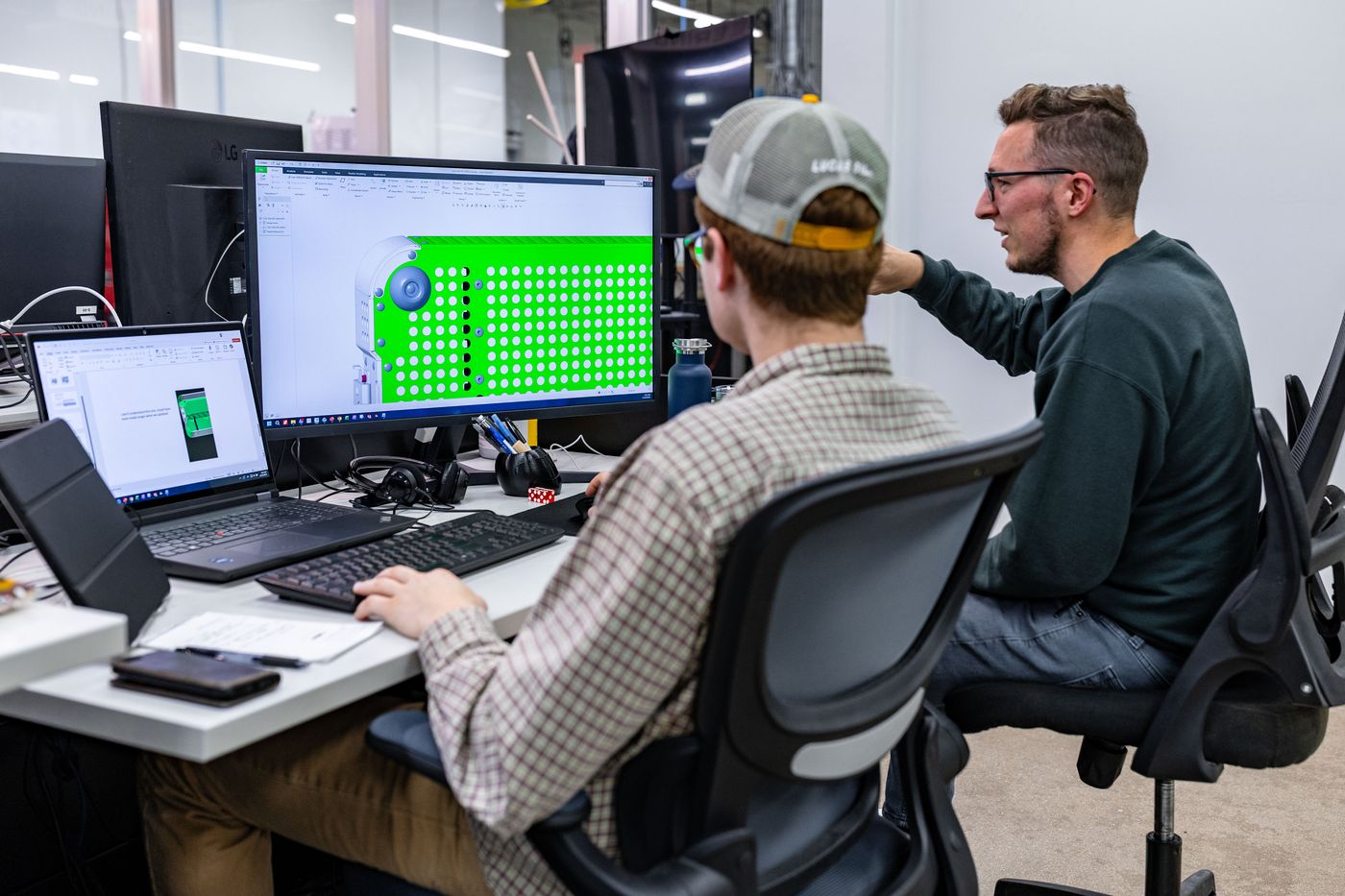
Arcamed is committed to picking up your project where it was left off. Whenever possible, the process begins with the CAD model in conjunction with released prints. CAD models, or computer-aided designs, are digital models of projects. Our expert team of engineers adopts the CAD model design and, with the use of Cloud NC, streamlines programming and optimizes the manufacturing process. This ensures:
- Alignment with the original design intent.
- Consistency in feature interpretation and inspection methodology.
- Elimination of translation-induced variability.
Transferring to a new supplier shouldn’t mean starting over. Through our legacy integration process, we maintain consistency without sacrificing momentum. By producing and inspecting against the same technical data package as the incumbent supplier, Arcamed effectively removes equivalency risk from our partners.
Early Capability Assessment
Effective design transfer processes require a structured intake and evaluation process to prevent downstream risk. To achieve this, front-loaded technical diligence is required.
The process begins with our cross-functional team of subject-matter experts (SMEs), including manufacturing, quality, programming, graphics, and engineering, reviewing all incoming data packages. Together, the team conducts a comprehensive feasibility assessment, which includes:
- Materials
- Tooling
- Inspection
- Assembly techniques
From this assessment, a formal decision is made on whether the opportunity can be executed to specifications. To date, Arcamed has been awarded 100% of design transfers since the program's installation.
This process informs our team of all technical gaps internally, allowing us to resolve any issues without requiring iterative clarification cycles with the customer.
Transparency
Strong partnerships are built on trust, and trust is built through transparency.
At Arcamed, we make our performance visible by publicly releasing our live OTD, OTIF, and ODF metrics. This gives current and potential partners a clear understanding of what delivery standards they can expect. If any operation is delayed due to supply chain constraints or a similar issue, customers are informed promptly to ensure communication remains proactive, direct, and honest.
Throughout the design transfer process, partners are connected with a dedicated project engineer who serves as a consistent point of contact. This creates a clear communication channel for critical updates, technical questions, and issue resolution without unnecessary noise.
The Result
Arcamed’s structured design transfer process enables OEMs to seamlessly transition suppliers with minimal disruption beyond improved performance. From a technical standpoint, the design intent, quality expectations, and functional performance remain unchanged – ensuring continuity without compromise.
Customers retain ownership of their prints and products while gaining a supplier who consistently delivers an 8-week production cycle at 99.1% on-time delivery, 98% on-time-in-full, and 97.5% order-defect-free performance.
The decision to change supplier is not an easy one, but with the right process and the right partner, design transfer can become more than a recovery plan—it can become a strategic advantage.